

Energy casino Plinko
Introduction
When I look at Energy casino Plinko, I see a format that seems almost too simple at first glance. A ball drops from the top of a board, bounces off pegs, and lands in a payout slot at the bottom. That is the entire visual idea. Yet in practice, Plinko creates a very specific kind of tension that many classic online slots do not reproduce in the same way. The simplicity is real, but it hides a sharper question: how much uncertainty is a player actually comfortable with from one drop to the next?
That is why Plinko has become so visible across modern online casino platforms. It is easy to understand in seconds, but the actual session experience can vary dramatically depending on stake size, board setup, number of rows, and especially the chosen risk level. On a page like Energy casino Plinko, the key issue is not whether the interface looks approachable. The real issue is what the game is asking from the player in terms of patience, bankroll control, and expectations.
In this review, I want to focus on the game itself rather than drift into a general casino overview. I will break down how Plinko works, why it feels different from slots and Energy Casino blackjack tips, what its strengths and limits look like in real play, and what a player in New Zealand should understand before deciding whether this format is worth their time.
What Plinko is and why it draws so much attention
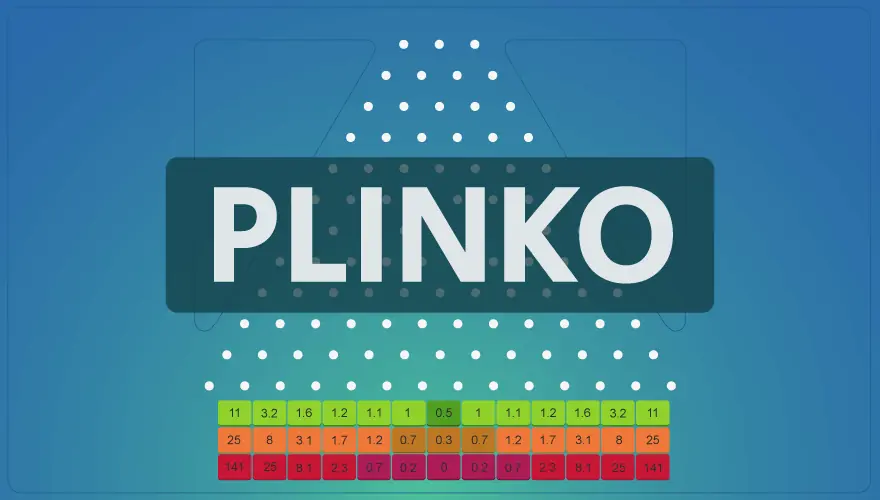
Plinko is a chance-based casino game built around a vertical pegboard. The player chooses a bet, often selects a risk mode, and then releases a ball from the top. As the ball falls, it deflects left and right until it reaches one of several multiplier pockets at the bottom. Those pockets determine the final return on that individual drop.
The reason this format stands out is straightforward: it turns randomness into something visible. In many games for New Zealand players, the random process is hidden behind spinning reels, card shuffles, or digital calculations that the player does not really see unfolding. In Plinko, the uncertainty is staged in front of you. You watch the path develop in real time, even though you cannot control it. That visual journey matters more than it may seem.
I think this is one of the main reasons Plinko became so noticeable. It gives players an immediate sense of participation without demanding technical knowledge. There are no paylines to decode, no card strategy charts, and no long feature rounds to wait for. You place a stake, choose a setup, and the result arrives fast.
There is also a psychological hook here that deserves a more honest explanation. Plinko often makes near-misses feel highly visible. When a ball bounces close to a high multiplier and then slides away at the last moment, the outcome feels dramatic even though the process remains random. That does not mean the game is unfair. It means the presentation of randomness is unusually vivid. For some players, that is exciting. For others, it can become frustrating quickly.
A second detail that makes Plinko memorable is that it compresses the emotional cycle of a session. In a slot, anticipation often builds through reel animation, bonus teases, and feature triggers. In Plinko, that cycle is condensed into a few seconds. The suspense is shorter, but often sharper.
How the core Plinko system works in practice
At a basic level, the mechanics of Energy casino Plinko are easy to explain. You choose your stake, set the board conditions if those options are available, and drop the ball. The ball collides with pegs on the way down, changing direction at each contact point. By the time it reaches the bottom, it lands in a slot tied to a payout multiplier such as 0.5x, 1x, 2x, 5x, 10x, or much higher depending on the configuration.
What matters in practice is that the board is not just visual decoration. The structure determines the distribution of outcomes. On many Plinko versions, central slots tend to carry lower multipliers and appear more frequently, while edge positions offer much larger returns but are significantly harder to hit. This creates a familiar balance: common modest results versus rare standout outcomes.
The movement itself may look chaotic, but the game is usually built around a defined probability model. Each bounce sends the ball left or right according to random logic. Over many drops, this creates a distribution where middle outcomes are more common than extreme ones. This is why the highest multipliers can look temptingly close while remaining statistically uncommon.
That point is important because players sometimes mistake visual closeness for realistic frequency. In Plinko, a high-value slot may sit just a few centimeters away on screen, but its practical distance in probability terms is much larger.
| Element | What it does | Why it matters to the player |
|---|---|---|
| Bet size | Sets the value of each drop | Directly affects session cost and variance exposure |
| Risk level | Changes payout distribution | Can shift the session from steady low returns to long dry spells with rare spikes |
| Rows or board depth | Influences path length and multiplier spread | More rows often mean wider outcome separation and stronger swings |
| Multiplier slots | Define the final return | Show where low-frequency high-payout results sit compared with common low-value landings |
One of the most useful ways to understand Plinko is to stop thinking of it as a “drop and hope” novelty and start seeing it as a probability distribution tool with a visual interface. That sounds dry, but it explains the experience accurately. The board is a display of outcome weighting.
Why the pace feels so different during a real session
The session rhythm in Plinko is one of its defining traits. Results come quickly. There is very little downtime between decisions and outcomes. This can make the format feel efficient, especially for players who do not enjoy long reel animations or drawn-out bonus sequences.
But speed has two sides. A fast result cycle means a player can go through many rounds in a short period. If bet sizing is careless, bankroll depletion can happen faster than expected. I often find that Plinko feels harmless in the first few minutes because each drop is visually small and mechanically simple. Then the session total starts moving much faster than the player anticipated.
That is one of the most important practical observations about Energy casino Plinko: the interface looks light, but the tempo can be financially heavy if the player does not set limits before starting.
The game also creates a specific emotional rhythm. Short losing sequences can feel trivial because each round ends so quickly. At the same time, a run of low multipliers may become more irritating than a comparable slot sequence because there is no side entertainment around it. No bonus symbols. No mini-features. No changing reel set. Just repeated drops and visible misses. Some players like that honesty. Others find it too bare once the novelty fades.
A third observation that separates Plinko from many other formats is this: the game often feels more intense when nothing special is happening. In slots, excitement usually rises when features trigger. In Plinko, the tension is present on ordinary rounds because every single drop carries a visible path toward high multipliers, even if the result ends in a low-return pocket. Before you make a deposit, it is worth reading Energy Casino poker guide for the fee and speed details.
Risk levels, probability, and what the player should really understand
If there is one setting that changes the identity of Plinko more than any other, it is the risk level. On many versions, players can choose low, medium, or high risk. This setting does not magically improve the expected value. Instead, it reshapes how outcomes are distributed across the board.
Low risk usually means more frequent returns around the center, often with smaller multipliers and fewer dramatic swings. High risk tends to reduce the frequency of better mid-range outcomes while pushing the most attractive multipliers further into the realm of rare hits. The game becomes more volatile, but not in an abstract sense. You feel it directly through longer stretches of modest or poor results interrupted by occasional standout landings.
This is where many players make a mistake. They see high risk and assume it simply means “better upside.” That is only half the picture. The other half is that the route to that upside can involve a lot of low-value outcomes, and the emotional cost of waiting for a strong hit is not the same for everyone.
- Low risk suits players who want smoother balance movement and less severe session swings.
- Medium risk often provides a middle ground between frequency and payout spread.
- High risk is better understood as a high-dispersion setup, where rare top-end results come at the price of much rougher short-term performance.
It is also important to remember that probability does not owe the player a correction. A long sequence of average landings does not mean a huge multiplier is “due.” Plinko can create that illusion because the board always displays the premium targets. Watching the ball flirt with those edge pockets repeatedly can encourage false pattern reading.
From a practical standpoint, this means two things. First, session planning matters more than many beginners expect. Second, demo play can be genuinely useful here, not as entertainment filler, but as a way to see how different risk modes alter the feel of the session.
How risky Plinko really is and who may enjoy that profile
Plinko can range from relatively mild to highly aggressive depending on the available settings, but even in calmer modes it remains a game of chance with potentially uneven short-term results. The risk is not just about whether you can hit a large multiplier. It is also about how quickly repeated drops can accumulate and how easy it is to keep playing because each round is so short.
For that reason, I would separate the suitability of Plinko into player types rather than treat it as universally appealing.
| Player type | How Plinko may feel | Likely verdict |
|---|---|---|
| Players who enjoy fast decisions | Direct, efficient, and easy to follow | Often a strong match |
| Players who want narrative-style bonus rounds | Too stripped back and repetitive | May prefer slots |
| Players comfortable with variance | Interesting because setup choices change the session character | Potentially very appealing |
| Players seeking strategic control | Limited influence after the drop begins | May prefer table games |
| Players with strict bankroll discipline | Works well if limits are respected | Can be manageable |
In my view, Plinko is often best for players who appreciate transparent randomness. By that I mean people who would rather see the uncertainty play out openly than watch it hidden behind more decorative mechanics. It is less suitable for those who need layered features, changing scenes, or a stronger sense of progression throughout a session.
What session results can look like over time
One drop in Plinko tells you almost nothing. Twenty drops may still tell you very little. This is another area where players sometimes misread the format. Because the game is visually simple, people can assume its outcomes are easy to judge in the short run. They are not.
Over a session, results tend to cluster around the more common lower multipliers, with occasional stronger returns depending on the board design and risk setting. The higher the risk profile, the more uneven that pattern can become. A player might go through long stretches without anything memorable and then suddenly hit a multiplier that changes the entire session picture.
This creates a very specific perception problem. Plinko can feel cold even during a mathematically normal run, because the game does not dress up neutral or weak results with extra spectacle. At the same time, one strong landing can make the whole session seem better than it was. The format exaggerates emotional contrast.
That is why I always recommend evaluating Plinko by session behavior rather than isolated highlights. A screenshot of a huge multiplier is not a reliable guide to the average experience. What matters is how often your chosen setup produces tolerable short-term results and whether that aligns with your bankroll and patience.
Where Plinko stands apart from slots and other casino formats
The easiest comparison is with classic online slots, but the differences are more substantial than they first appear. Slots usually rely on reel combinations, symbol weighting, and feature rounds to create entertainment value. Plinko strips all of that away and puts almost everything into one visible event: the fall of the ball.
This has several practical consequences.
- Less thematic packaging. Plinko is not about story, characters, or visual world-building. It is about outcome delivery.
- Faster feedback. The time between bet placement and result is often shorter than in many slots.
- More obvious distribution logic. Players can see where the low and high multipliers sit, even if they cannot influence the path.
- Outcome remains visible across the full drop, which suits players who want to watch the result unfold rather than wait for a card reveal or spin sequence.
Compared with roulette guide for Energy Casino users, Plinko shares the appeal of quick chance-based resolution, but it feels more animated because the result develops across a visible route rather than landing instantly on a final number. Compared with blackjack or poker-style games, it offers far less decision-making depth. Compared with crash-style games, it can feel more tactile and easier for casual players to grasp.
The key difference from slots is that Plinko does not try to hide repetition. A slot can recycle the same mathematical structure while constantly changing symbols and mini-events. Plinko presents repetition openly. If you enjoy that directness, it is refreshing. If you need variety layered into the session, it may feel thin after a while.
Practical strengths and weaker points of the format
I think the strongest side of Energy casino Plinko is clarity. The player can understand the basic flow almost immediately. There is little friction between opening the game and knowing what is happening. That makes it accessible without making it trivial.
Another strength is flexibility of feel. A simple change in risk level or board depth can noticeably alter the session profile. This gives the format more range than some people expect. Low-risk Plinko and high-risk Plinko can feel like two very different experiences, even when the visual layout barely changes.
There is also an honesty to the presentation. The game does not rely on long setup sequences before showing its core behavior. Within a few rounds, you already know whether the rhythm suits you.
At the same time, the limitations are real. Repetition arrives quickly for some players. Because the interface is minimal, there is less sensory variety than in slots. Another issue is that the visible path of the ball can intensify emotional reactions to misses. Near-edge bounces are memorable, and not always in a good way.
I would also flag bankroll erosion as a practical weakness for undisciplined players. Fast rounds plus easy re-bets can make spending feel slower than it actually is. This is not unique to Plinko, but the clean interface can make it less noticeable.
Finally, players looking for control may find the setup choices thinner than they hoped. Yes, risk selection matters. Yes, rows and stake matter. But once the ball drops, the experience is fundamentally passive.
What to check before launching Energy casino Plinko
Before starting a session, I would focus on a few practical checks rather than just the maximum multiplier on display. That headline number attracts attention, but it tells only a small part of the story.
- Review the risk options. Understand whether the version offers low, medium, and high settings, and think about what kind of session you actually want.
- Look at board structure. If rows can be adjusted, remember that more rows often mean a wider spread between ordinary and exceptional outcomes.
- Set a session budget first. Plinko’s speed makes pre-set limits more important than impulse decisions made mid-session.
- Use demo mode if available. This is especially useful for testing how the pace feels, not just for learning the interface.
- Do not judge by isolated big hits. Focus on the likely pattern of many drops, not the best-case screenshot.
For New Zealand players, this practical approach matters more than hype. Plinko is easy to start, but not every easy-to-start format is easy to manage well. The right question is not “Can I understand it quickly?” The right question is “Do I actually enjoy this style of randomness enough to play it responsibly?”
Final verdict on Energy casino Plinko
Energy casino Plinko offers a very specific kind of casino experience: fast, visual, stripped back, and heavily shaped by distribution rather than by theme or feature design. Its biggest strength is that it makes randomness visible and understandable without pretending to be more strategic than it is. You know the basic premise immediately, and the impact of risk settings becomes clear fairly quickly in real play.
What the game does well is not mystery or spectacle. It delivers direct suspense in short bursts. For players who like rapid outcomes, clean interfaces, and a format where setup choices genuinely change the session feel, Plinko can be a strong option. It also works well for people who prefer a transparent chance-based model over the layered presentation of many slots.
Where caution is needed is equally clear. The pace can burn through a bankroll faster than expected, high-risk modes can produce rough stretches, and the visible near-miss effect can be more emotionally charged than the game’s minimalist design suggests. Players who want richer bonus structures, stronger progression, or meaningful strategic input may find that Plinko loses its appeal sooner than they hoped.
My overall view is simple. Plinko is not compelling because it is trendy. It is compelling because it turns a probability model into a tense, watchable sequence that some players find sharper and more honest than reels or cards. If that directness appeals to you, Energy casino Plinko is worth trying with clear limits and realistic expectations. If you need more control, more variety, or more layered entertainment, another format will probably suit you better.
FAQ
What is Plinko on Energy, and how does the ball drop work?
Plinko sends a ball through a grid of pegs and drops it into one of the outcome slots. Each landing position determines the multiplier and the resulting win in the real-money mode.
How can players start a Plinko round in real-money play instead of demo mode?
Switch from demo to real-money play, then place a bet and launch the ball. Real-money rounds require an active casino session with a logged-in account.
Where can the current Plinko multiplier be seen during the round?
The multiplier is shown based on where the ball lands in the grid.
How does a bonus code or promo offer work with Plinko, if one is available?
Any promo coverage depends on the current offer conditions shown in the cashier or promotions area. Only valid promotions that include casino games apply, and Plinko rounds follow the stated wagering and eligibility rules.
